

Every August, National Eye Exam Month serves as an important reminder that your eyes are not only the “windows to your soul,” but also windows into your overall health. While clear vision is the most obvious benefit of a comprehensive eye exam, routine visits to an eye doctor can reveal much more—including early signs of serious systemic health conditions.
At North Fulton Eye Center, we’ve been caring for the vision of families in North Fulton and Forsyth County for more than 30 years, and we know firsthand that regular eye exams save sight—and sometimes even lives.
Why Eye Exams Matter for All Ages
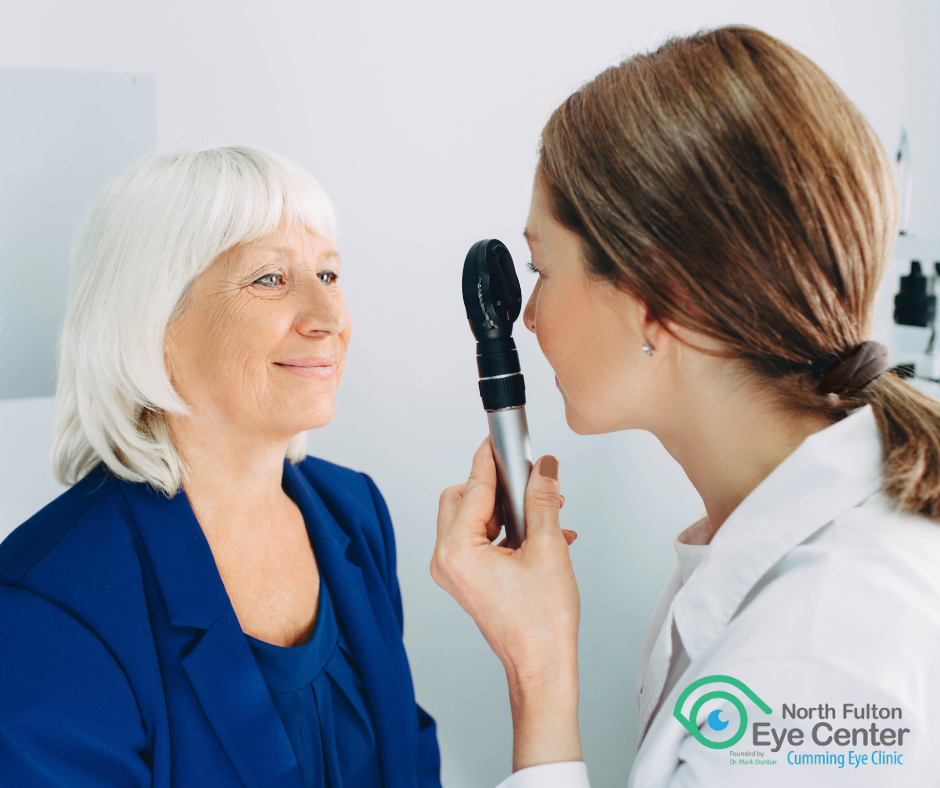
A comprehensive eye exam is far more thorough than a quick vision screening. In addition to checking how well you see, your ophthalmologist will:
- Examine the health of your retina, optic nerve, cornea, and other eye structures.
- Measure your eye pressure to check for glaucoma.
- Detect changes in the blood vessels and tissues inside your eye that may indicate underlying health conditions.
Children benefit from early exams to catch vision problems that can affect learning and development. Adults need regular exams to detect and treat eye diseases early, when they’re most manageable. Seniors are at higher risk for cataracts, glaucoma, macular degeneration, and other age-related changes that may not have noticeable symptoms at first.
The Eye–Body Health Connection
Your eyes share a close relationship with your overall health. Certain systemic conditions can be first detected during an eye exam, sometimes before symptoms appear elsewhere.
Hypertension (High Blood Pressure)
Eye doctors can spot narrowing of retinal arteries, bleeding, or swelling inside the eye—all potential signs of uncontrolled blood pressure.
- When to be concerned: If your eye exam shows significant retinal vessel changes, bleeding, or swelling, especially if accompanied by headaches, vision changes, or chest pain.
- When not to be concerned: Mild vessel narrowing that remains stable over multiple exams and is well controlled with medication and healthy lifestyle changes.
Diabetes
Diabetic retinopathy, which damages the tiny blood vessels in the retina, may develop before a person is diagnosed with diabetes.
- When to be concerned: If we find leaking blood vessels, retinal swelling, or new abnormal vessels forming—especially if you haven’t had a recent blood sugar test or have poorly controlled diabetes.
- When not to be concerned: A normal eye exam with no signs of retinal damage in a patient whose blood sugar is well controlled.
High Cholesterol
Yellowish deposits in the eye or plaque buildup in retinal vessels can signal elevated cholesterol levels.
- When to be concerned: If cholesterol deposits appear suddenly, especially in younger patients, or if we see retinal vessel blockages that could increase stroke risk.
- When not to be concerned: Stable, mild deposits in older patients with otherwise healthy eye exams, especially when cholesterol is well managed with diet or medication.
Autoimmune Disorders
Conditions like lupus or multiple sclerosis can cause inflammation in the eyes.
- When to be concerned: New or worsening inflammation inside the eye, sudden blurred vision, or pain—especially if paired with joint pain, rashes, or neurological symptoms.
- When not to be concerned: Stable, old scarring with no active inflammation and no change in vision.
Thyroid Disease
Bulging eyes, lid retraction, or swelling can be early signs of thyroid eye disease.
- When to be concerned: Rapid changes in eye appearance, new double vision, or pain/pressure behind the eyes.
- When not to be concerned: Mild lid changes that have remained stable for years without progression.
How Often Should You Have an Eye Exam?
The American Academy of Ophthalmology recommends:
- Children: First comprehensive exam at 6–12 months (if at risk), at age 3–5, before starting school, and every 1–2 years thereafter.
- Adults (18–40): Every 2–4 years if healthy; sooner if you have vision problems or risk factors.
- Adults (40–54): Every 2–3 years.
- Adults (55–64): Every 1–3 years.
- Adults (65+): Every 1–2 years.
If you have diabetes, hypertension, a family history of eye disease, or other medical concerns, your eye doctor may recommend more frequent visits.
Symptoms That Should Never Be Ignored
Schedule an appointment promptly if you notice:
- Sudden blurred or double vision
- Flashes of light or new floaters
- Sudden loss of vision in one or both eyes
- Eye pain or pressure
- Distorted or wavy lines when looking at objects
These may be signs of urgent eye conditions that require immediate attention.
The Benefits of Choosing a Long-Standing Private Ophthalmology Practice
At North Fulton Eye Center, we take the time to understand your unique needs. Unlike high-volume corporate chains, our patients see the same dedicated ophthalmologists year after year, ensuring continuity of care. We collaborate closely with your primary care doctor or specialist when we detect signs of systemic conditions—because your vision and your overall health are connected.
Take the First Step Toward Lifelong Healthy Vision
National Eye Exam Month is the perfect opportunity to make your vision health a priority. Whether you need a routine check-up, are managing a chronic eye condition, or have noticed changes in your vision, our team is here to provide thorough, compassionate care.
📞 To schedule, call (770) 475-0123.
📍 Serving patients in North Fulton and Forsyth County for over 30 years.