

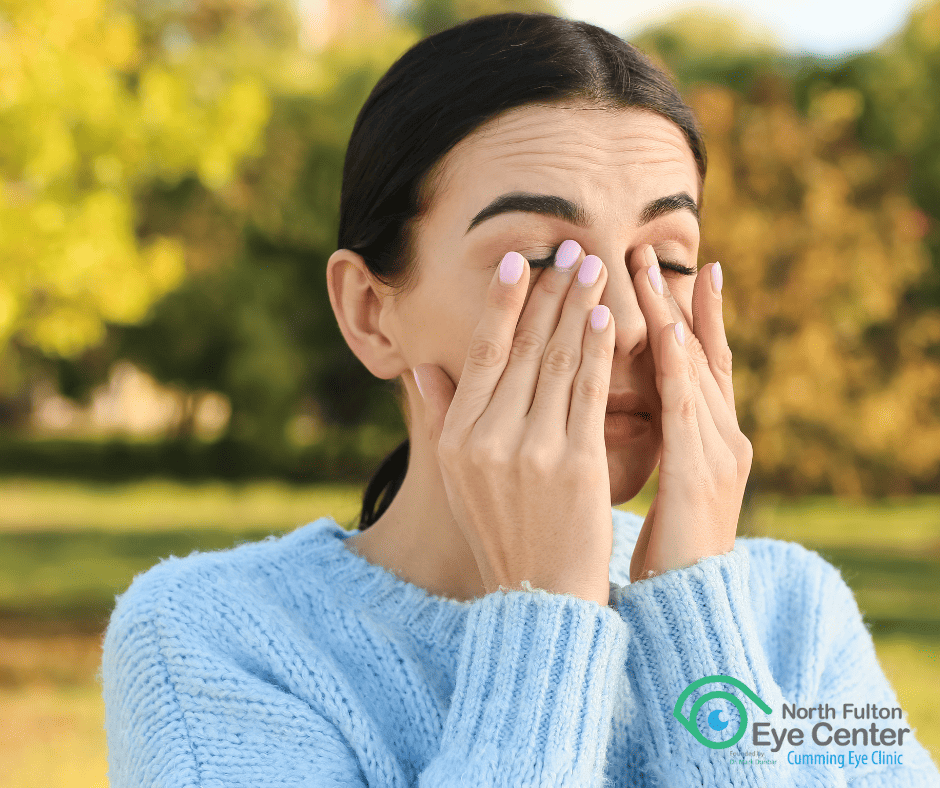
Fall may not officially be here, but here in Atlanta, Georgia, allergy season often starts weeks earlier. Many residents notice symptoms creeping in by late August and early September, especially watery or itchy eyes. For adults, these symptoms can interfere with work, driving, and daily life.
At North Fulton Eye Center, we want patients to understand why fall allergies arrive early in Atlanta, where to check allergen counts, and what steps to take if allergies are affecting your eyes.
Why Do Fall Allergies Start Early in Atlanta?
Atlanta ranks among the top U.S. cities for seasonal allergies due to its warm climate, long growing seasons, and high pollen counts. The main culprits of early fall allergies include:
- Ragweed pollen – Begins releasing pollen as early as August and peaks in mid-to-late September. Just one ragweed plant can release up to 1 billion pollen grains that travel long distances.
- Mold spores – Thrive in warm, humid Georgia weather and increase with decaying leaves and yard debris.
- Lingering grasses and late-blooming trees – In some years, “fall elm” and other species add to the allergen mix.
Because these allergens emerge before the official first day of fall, Atlanta adults often feel “fall allergies” in early September.
Where to Check Atlanta’s Allergen Levels
Monitoring allergen counts can help you plan outdoor activities and anticipate symptom flare-ups. Reliable resources include:
- Local allergists publish daily pollen and mold counts.
- National Allergy Bureau (NAB): Provides region-specific pollen forecasts.
- Local news weather segments: Many Atlanta stations include pollen forecasts alongside temperature and humidity.
- Smartphone apps and wearables: Allergy tracking apps (like WebMD Allergy or Weather.com’s allergy tracker) can send alerts for high ragweed or mold days.
How Fall Allergies Affect the Eyes
Allergic eye symptoms are extremely common in adults and often worsen in September:
- Itchy, watery eyes
- Redness and swelling of the conjunctiva
- Stringy or watery eye discharge
- Light sensitivity
- Blurred vision (from excessive tearing or rubbing)
These symptoms fall under allergic conjunctivitis, an inflammatory response triggered by allergens contacting the surface of the eye.
Best Practices to Protect Your Eyes During Early Fall Allergy Season
1. Reduce Exposure to Allergens
- Keep windows closed in your home and car, especially during peak pollen times (early morning and late afternoon).
- Use air conditioning with HEPA or high-quality filters.
- After being outdoors, shower and change clothes to remove pollen from hair and skin.
- Avoid drying clothes outdoors, as pollen can cling to fabric.
2. Practice Eye-Specific Relief
- Artificial tears can help flush allergens off the eye surface.
- Cold compresses soothe itching and reduce swelling.
- Avoid rubbing your eyes, which can worsen irritation.
- If you wear contact lenses, consider switching to daily disposables during allergy season or using glasses when symptoms are severe.
3. Use Medications When Needed
- Over-the-counter antihistamine eye drops can provide relief for itching and redness.
- Combination drops with antihistamine and mast-cell stabilizers may help prevent flare-ups if used regularly.
- Oral antihistamines may reduce overall allergy symptoms but can sometimes worsen dry eye. Discuss with your physician or pharmacist before use.
4. Keep Your Eyes Healthy
- Wash your eyelids with gentle lid scrubs if mucus or allergens build up.
- Stay hydrated to maintain a stable tear film.
- Protect your eyes outdoors with wraparound sunglasses, which block pollen and reduce UV exposure.
When to See an Ophthalmologist
While most allergy-related eye irritation is manageable, schedule an appointment if you notice:
- Persistent redness, swelling, or pain in one or both eyes
- Thick yellow/green discharge (may suggest bacterial infection rather than allergies)
- Vision changes that don’t clear with blinking
- Symptoms that don’t improve with over-the-counter treatments
An ophthalmologist can distinguish between allergic conjunctivitis, infections, dry eye disease, and other eye conditions that mimic allergy symptoms. In some cases, prescription-strength drops or advanced therapies are needed for long-term relief.
Key Takeaways for Adults in Atlanta
- Fall allergies start early here, often in late August or early September.
- Ragweed pollen and mold spores are the major triggers in Atlanta’s early fall.
- Check daily pollen counts from Atlanta Allergy & Asthma or the National Allergy Bureau to plan your activities.
- Protect your eyes with artificial tears, cold compresses, sunglasses, and good hygiene.
- See an ophthalmologist if symptoms are persistent, severe, or affect your vision.
For over 30 years, North Fulton Eye Center has provided comprehensive care for patients across Roswell, Cumming, and the North Atlanta community. If fall allergies are affecting your eyes, we’re here to help identify the cause, provide relief, and protect your long-term vision.
Schedule your eye exam today to stay ahead of allergy season and keep your eyes healthy this fall.
📍 Roswell & Cumming Locations | 📞 Call us today to book an appointment. (770) 475-0123