

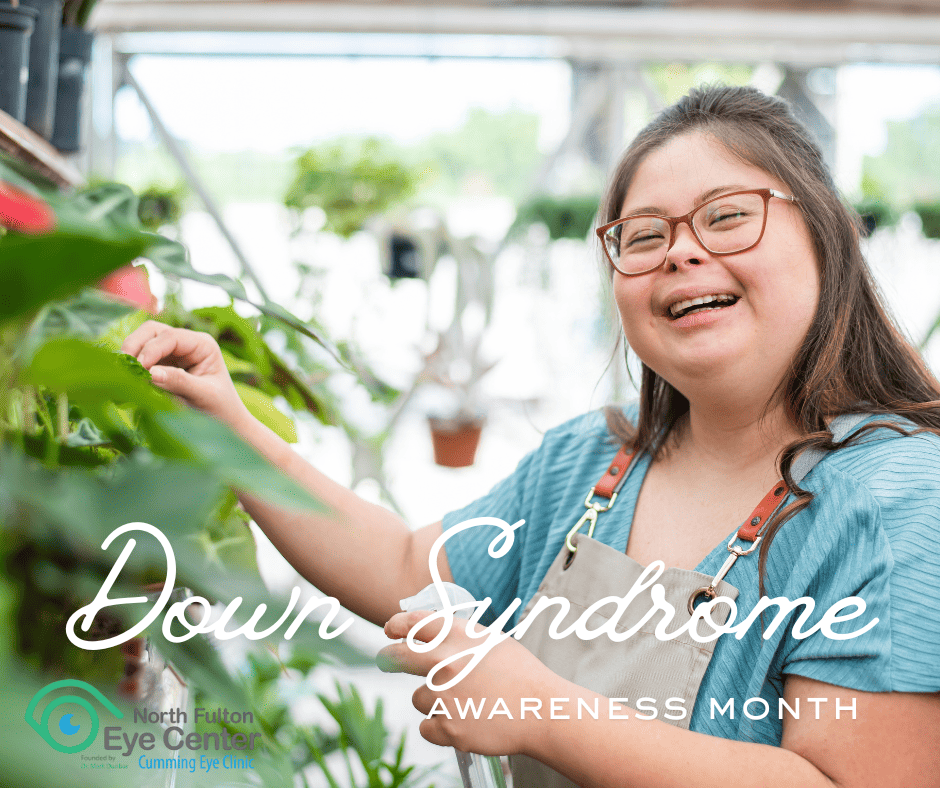
October is Down Syndrome Awareness Month—a time to celebrate individuals with Down Syndrome and raise awareness about their unique medical and developmental needs, including eye health. Many people don’t realize that individuals with Down Syndrome are at a higher risk for certain vision conditions that require lifelong monitoring and care.
At North Fulton Eye Center, we understand the importance of continuity as patients transition from pediatric to adult medical teams. Our ophthalmologists are specially trained to provide comprehensive, compassionate care to individuals with Down Syndrome throughout every stage of life—protecting their sight and supporting their independence.
How Down Syndrome Affects the Eyes
Vision problems are common among individuals with Down Syndrome, affecting up to 60–80% of children according to the American Academy of Ophthalmology (AAO). Because the eyes play a key role in learning, coordination, and communication, early detection and consistent management are critical to quality of life. Common eye conditions associated with Down Syndrome include:- Refractive errors – Nearsightedness (myopia), farsightedness (hyperopia), and astigmatism occur more frequently and often require corrective lenses.
- Strabismus (eye misalignment) – Crossed or drifting eyes can affect depth perception and may need glasses, eye exercises, or surgery for correction.
- Nystagmus – Rapid, involuntary eye movements that can affect visual focus and clarity.
- Cataracts – Clouding of the eye’s lens can appear in infancy or early adulthood and may require surgical removal.
- Keratoconus – A progressive thinning of the cornea that can cause blurred or distorted vision; this typically develops during the teen or young adult years.
- Blepharitis and dry eye – Eyelid inflammation and reduced tear production can cause discomfort or recurrent redness.
The Importance of Ongoing Eye Care Across the Lifespan
Children with Down Syndrome often receive exceptional multidisciplinary care through pediatric specialists. However, as they reach their late teens and adulthood, care can become fragmented. Many families find the transition from pediatric ophthalmology to adult eye care challenging—especially when comfort and trust have been built over years with their pediatric team. That’s where North Fulton Eye Center steps in. Our ophthalmologists have decades of experience treating patients with developmental and genetic conditions, including Down Syndrome. We collaborate with pediatricians, special needs coordinators, and family caregivers to ensure a seamless, supportive transition into adult eye care. We take time to explain each step of the examination, adapt to sensory or communication differences, and create an environment where every patient feels at ease.Why the Transition to Adult Eye Care Matters
As individuals with Down Syndrome grow older, new eye issues can emerge or existing ones can progress. Regular monitoring helps detect changes early—before vision loss affects independence, mobility, or social participation. Adult ophthalmic care is particularly important because:- Refractive needs often change in adolescence and early adulthood.
- Keratoconus can worsen rapidly in the late teens or 20s without early detection.
- Cataracts and glaucoma may develop earlier than in the general population.
- Adults may be at higher risk for dry eye syndrome due to decreased blinking or medication side effects.
Our Specialized Approach at North Fulton Eye Center
At North Fulton Eye Center, we take pride in being a private ophthalmology practice that delivers personalized, unrushed care. Our ophthalmologists are skilled in working with patients who have intellectual or developmental differences, and we customize each visit to meet individual needs. Here’s what families can expect when transitioning care to our team:- Comprehensive adult eye exams that assess vision, eye alignment, and internal eye health.
- Advanced diagnostic imaging for early detection of conditions like keratoconus and cataracts.
- Collaboration with primary and specialty physicians, including pediatricians, optometrists, and special needs care teams.
- Education for caregivers and patients about daily eye care, proper use of glasses, and when to seek urgent attention.
- Comfort-focused visits, where sensory accommodations, extra time, and consistent staff support make patients feel safe and understood.
When to Schedule an Eye Exam
For individuals with Down Syndrome, eye exams are recommended:- Every 6 months to 1 year in childhood
- Annually in adulthood, or more often if a condition is present
- Immediately if there are signs such as squinting, eye rubbing, tilting the head, frequent falls, or sudden changes in vision