

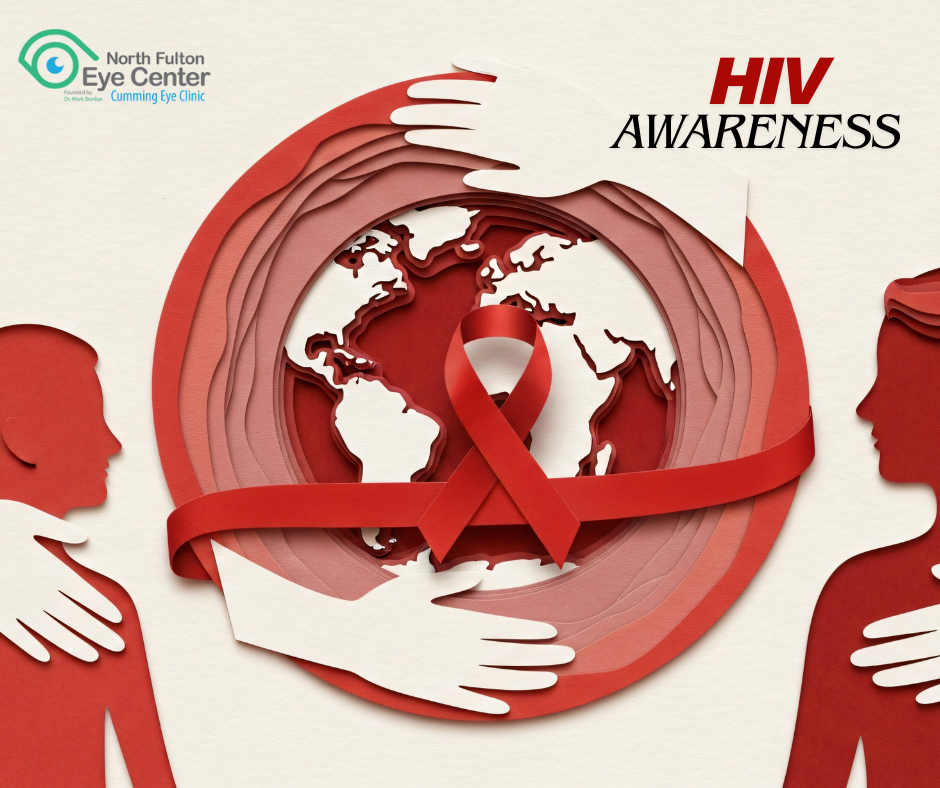
December includes World AIDS Day on December 1 and is recognized nationally as a time to increase awareness of HIV, current prevalence, and advances in care. While HIV is most often discussed in the context of primary care or infectious disease, it also has important implications for eye health. Ophthalmologists play a meaningful role in the care of patients living with HIV, both in early detection of ocular conditions and in long-term visual health management.
HIV in metro Atlanta compared with the United States
Georgia continues to have one of the higher HIV burdens in the United States, with the largest concentration of cases in the Atlanta metropolitan area.
According to the Georgia Department of Public Health’s most recent HIV surveillance data, the Atlanta Metropolitan Statistical Area accounts for the majority of new HIV diagnoses and people living with HIV in the state. The Atlanta metro area includes Fulton, DeKalb, Cobb, Gwinnett, and surrounding counties.
Fulton County, where North Fulton Eye Center serves many patients, has consistently reported HIV diagnosis rates significantly higher than the national average. In recent surveillance reports, Fulton County’s rate of new HIV diagnoses exceeded 50 per 100,000 people, compared with a national rate closer to 14 per 100,000 people ages 13 and older.
These data have led federal and state public health agencies to identify metro Atlanta as a priority region for ongoing HIV prevention, screening, and care efforts.
Why HIV awareness matters in eye health
HIV affects the immune system, and before the widespread use of effective antiretroviral therapy, eye complications were common and often severe. Advances in treatment have significantly reduced the frequency of vision-threatening disease, but ocular conditions related to HIV still occur and remain clinically important.
Some eye conditions may be among the first signs of immune suppression, while others develop later in the course of disease. Because of this, ophthalmologic evaluation is an important part of comprehensive care for individuals living with HIV.
Common eye conditions associated with HIV
HIV can affect the eyes in several ways, particularly when immune function is reduced. Conditions seen by ophthalmologists may include:
- Retinal infections, such as cytomegalovirus (CMV) retinitis, which historically was a leading cause of vision loss in patients with advanced HIV
- HIV-related retinopathy, involving changes to the small blood vessels in the retina
- Uveitis, or inflammation inside the eye
- Opportunistic infections affecting the eye and surrounding structures
- Increased risk of dry eye disease and ocular surface irritation
- Medication-related ocular side effects from certain treatments
With modern HIV therapy, severe retinal infections are far less common than in previous decades, but they have not been eliminated entirely. Regular eye exams remain important, especially for patients with a history of advanced disease or fluctuating immune status.
The impact of modern HIV treatment on eye disease
Today, HIV is considered a manageable chronic condition when diagnosed early and treated consistently with antiretroviral therapy. Effective treatment helps preserve immune function and significantly reduces the risk of many HIV-related eye complications.
Patients who maintain viral suppression and stable immune markers are much less likely to develop severe ocular infections than in the past. However, ophthalmologic monitoring is still recommended because some eye conditions can develop gradually or without obvious symptoms in early stages.
Routine eye care allows ophthalmologists to identify subtle retinal or inflammatory changes before vision is affected.
How ophthalmologists support patients living with HIV
Ophthalmologists contribute to HIV care in several important ways:
- Detecting early signs of retinal or ocular disease
- Monitoring for progression or recurrence of eye conditions
- Coordinating care with primary care physicians, infectious disease specialists, and internists
- Managing chronic eye conditions that may be more common in immunocompromised patients
- Preserving vision and quality of life through early intervention
Eye exams may also reveal findings that prompt referral for further systemic evaluation, supporting comprehensive, team-based care.
Common misconceptions about HIV and vision
Misconception: HIV no longer affects the eyes
Fact: While serious eye complications are less common today, HIV-related eye conditions still occur and require monitoring.
Misconception: Eye exams are only needed if vision changes occur
Fact: Some retinal or inflammatory conditions can develop without noticeable symptoms initially. Regular exams allow for early detection.
Misconception: Only patients with advanced HIV need ophthalmologic care
Fact: Eye health is important at all stages of HIV, especially for patients with a history of immune suppression or other medical conditions.
Why December HIV Awareness matters for ophthalmology patients
December HIV Awareness provides an opportunity to reinforce that HIV care is multidisciplinary. Vision health is an important part of overall well-being, and ophthalmologists remain an essential component of long-term care for patients living with HIV.
In regions like metro Atlanta, where prevalence remains higher than the national average, awareness helps ensure patients receive appropriate screening, monitoring, and referrals when needed.
A note of pride from North Fulton Eye Center
For decades, North Fulton Eye Center has served patients across North Fulton and Forsyth counties with comprehensive, attentive ophthalmologic care. Caring for patients living with HIV is part of providing inclusive, evidence-based eye care to our community.
We are proud to support the visual health of patients with a wide range of medical backgrounds and needs, and to work alongside other healthcare providers to help protect sight and quality of life for those living with chronic conditions, including HIV.