


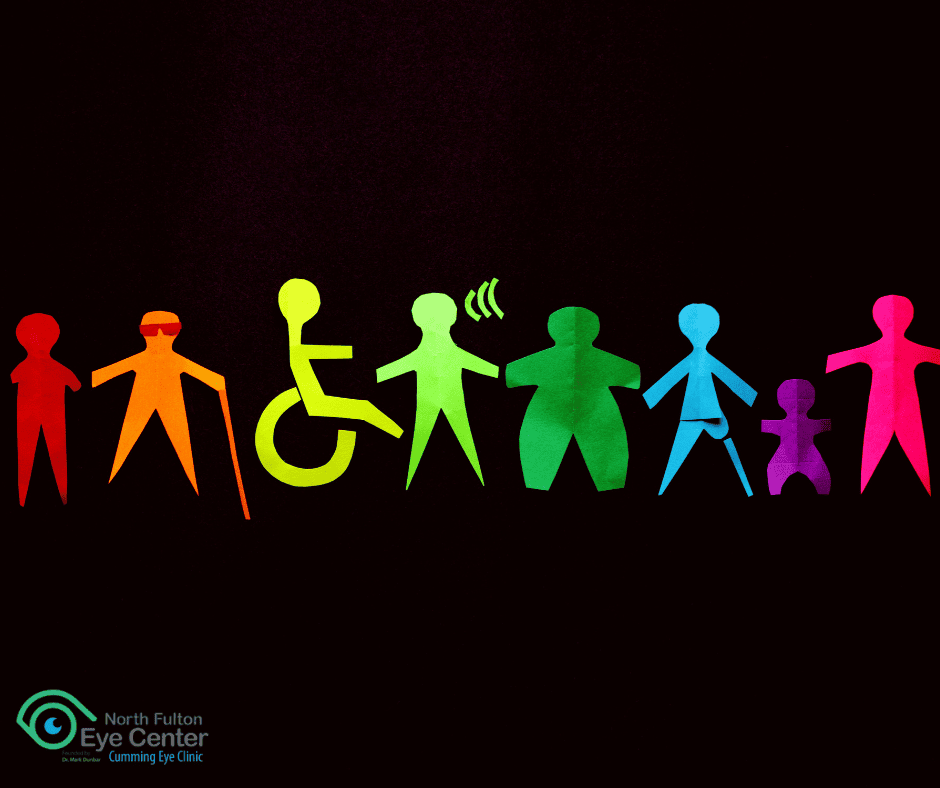
International Day of Persons with Disabilities is observed each year on December 3. The observance was established by the United Nations to promote understanding of disability, advance the rights and well-being of people with disabilities, and encourage inclusion across healthcare, education, and community life.
For ophthalmology, this day highlights the essential role eye care plays in supporting independence, safety, learning, and quality of life for people with disabilities of all ages.
Why International Day of Persons with Disabilities is observed in December
The United Nations designated December 3 in 1992 as part of broader international efforts to address human rights, accessibility, and social inclusion. Observing this day in December reinforces that disability awareness is a year-round responsibility and encourages reflection on access to care, technology, and services before the close of the calendar year.
In healthcare, the observance emphasizes the importance of removing barriers to care and ensuring that medical services, including vision care, are accessible and inclusive.
Understanding disability in the context of vision and eye health
Disability is a broad term that includes physical, sensory, intellectual, developmental, and neurologic conditions. Vision impairment is one of the most common sensory disabilities worldwide and can affect people at any age.
Vision disability can range from mild visual impairment to low vision or blindness. Some individuals are born with eye conditions, while others develop vision loss due to disease, injury, or age-related changes. Vision impairment may occur on its own or alongside other disabilities, such as neurologic or developmental conditions.
In ophthalmology, care focuses not only on diagnosing and treating eye disease, but also on supporting functional vision and daily living.
How common vision impairment is among people with disabilities
Vision impairment and disability frequently overlap. Many individuals with disabilities also experience eye or visual conditions that affect how they interact with their environment.
Certain medical and developmental conditions are associated with higher rates of eye disease or visual impairment, including:
- Neurologic conditions
- Genetic syndromes
- Developmental delays
- Chronic systemic illnesses
- Age-related conditions
Because vision plays a central role in communication, mobility, and learning, eye health is a critical component of comprehensive disability care.
The role of ophthalmology in supporting people with disabilities
Ophthalmologists play an important role in both medical treatment and long-term functional support for patients with disabilities. This includes:
- Diagnosing eye diseases and visual disorders
- Monitoring chronic or progressive eye conditions
- Managing eye complications related to systemic disease
- Coordinating care with primary care physicians, neurologists, pediatricians, and other specialists
- Supporting visual function through medical, surgical, or optical interventions
Regular eye examinations are important because some eye conditions develop gradually and may not be immediately noticeable, particularly in patients with communication or cognitive challenges.
Vision loss as a disability and as a contributing factor
Vision impairment itself is recognized as a disability when it limits daily activities or participation. Even partial vision loss can affect reading, driving, balance, and independence.
For individuals who already have other disabilities, untreated vision problems can compound challenges by increasing fall risk, limiting communication, or affecting learning and orientation. Identifying and managing eye conditions can significantly improve overall functioning and quality of life.
Common misconceptions related to disability and vision
Misconception: Vision loss is an inevitable part of disability
Fact: Many vision conditions can be treated, managed, or supported with proper ophthalmologic care.
Misconception: Eye exams are unnecessary if a person does not complain of vision problems
Fact: Some individuals may not recognize or communicate vision changes. Routine eye exams are essential for early detection.
Misconception: People with disabilities cannot benefit from vision treatment
Fact: Improving or preserving vision often enhances independence, safety, and engagement, regardless of other disabilities.
Misconception: Disability automatically means total blindness
Fact: Vision impairment exists on a spectrum, and many individuals have usable vision that can be supported with appropriate care.
Accessibility and inclusive eye care
International Day of Persons with Disabilities also draws attention to the importance of accessible healthcare environments. In ophthalmology, this includes:
- Clear communication and patient education
- Allowing adequate time for examinations
- Supporting patients with mobility, sensory, or communication needs
- Coordinating care with caregivers and family members when appropriate
Inclusive eye care recognizes that patients have diverse needs and that equitable care sometimes requires adaptation, not uniformity.
Why this observance matters for ophthalmology practices
Ophthalmology is uniquely positioned at the intersection of disability prevention and disability support. Early detection and treatment of eye disease can prevent or reduce vision loss, while ongoing care helps individuals adapt to changes in vision over time.
International Day of Persons with Disabilities emphasizes that protecting vision is not only about eyesight, but also about participation, independence, and quality of life.
A broader perspective on eye health and inclusion
Disability is a natural part of human diversity. Vision care supports people across the lifespan, from children with visual or developmental conditions to adults and older individuals managing chronic or age-related eye disease.
By focusing on evidence-based care, accessibility, and patient-centered approaches, ophthalmology contributes to healthier, more inclusive communities.
Why December awareness matters
Observing International Day of Persons with Disabilities in December encourages reflection on how healthcare systems serve patients with disabilities and how access to services can continue to improve.
For ophthalmology, this observance reinforces a clear message: comprehensive eye care is an essential part of supporting people with disabilities and promoting long-term visual health and independence.