

April in Atlanta is widely recognized as peak allergy season—and for many patients, the eyes are one of the first and most significantly affected areas. The combination of dense tree coverage, climate patterns, and prolonged pollen seasons makes Atlanta one of the most challenging environments in the country for ocular allergies.
Understanding how pollen impacts eye health is critical, particularly during April, when exposure levels are at their highest.
Why April Is the Peak of Pollen Season in Atlanta
Atlanta’s pollen season begins earlier than most regions, often starting as early as February and intensifying through March and April. By mid-March to mid-April, pollen counts typically reach their highest levels of the year.
Tree pollen is the dominant allergen during this time, particularly from oak, pine, cedar, and maple trees. These trees release large quantities of lightweight pollen that can travel long distances and remain suspended in the air.
The scale of pollen exposure in Atlanta is notably higher than the national average. While the average pollen count across the United States is approximately 665 grains per cubic meter, Atlanta has recorded spring averages approaching 3,900 grains per cubic meter.
During peak days in April, pollen counts can exceed 2,000 grains per cubic meter—and in extreme cases, levels have surpassed 14,000, setting record highs in recent years.
These elevated levels are a direct result of Atlanta’s dense urban forest, warm climate, and atmospheric conditions that allow pollen to accumulate and persist in the air.
How Pollen Affects the Eyes
Pollen particles are microscopic and easily airborne, allowing them to come into direct contact with the surface of the eye. When pollen lands on the conjunctiva—the thin membrane covering the white of the eye—it can trigger an allergic reaction known as allergic conjunctivitis.
This reaction is driven by the immune system. In sensitive individuals, pollen is recognized as a foreign substance, leading to the release of histamine and other inflammatory mediators. The result is a cascade of symptoms that affect both comfort and visual function.
Common ocular symptoms during pollen season include itching, redness, tearing, burning, and swelling of the eyelids. Many patients also report blurred vision, particularly when tear film stability is disrupted.
In a high-pollen environment like Atlanta, these symptoms can persist daily for weeks, especially during April when exposure is continuous.
Why Eye Symptoms Are Often More Severe in Atlanta
Atlanta’s environmental conditions amplify the impact of pollen on the eyes. The city is often referred to as a “city in the forest,” with a high density of pollen-producing trees. Combined with warm temperatures and low wind dispersion, pollen tends to accumulate rather than dissipate.
Pollen grains can also adhere to surfaces, including skin, hair, clothing, and contact lenses. This increases the duration of exposure, even after individuals return indoors.
Additionally, overlap between tree pollen and the early onset of grass pollen in late April creates a compounded allergen environment. This overlap can intensify symptoms, particularly in patients with multiple sensitivities.
The Impact on Tear Film and Ocular Surface Health
Pollen exposure directly affects the tear film, which is essential for maintaining eye comfort and clear vision. Inflammatory responses triggered by allergens can destabilize the tear film, leading to increased evaporation and symptoms consistent with dry eye.
This is particularly relevant for patients already predisposed to dry eye disease, as pollen can exacerbate underlying conditions. Chronic inflammation of the ocular surface may also increase sensitivity to light and reduce tolerance for contact lens wear.
In some cases, repeated exposure to allergens can lead to more persistent inflammatory conditions, requiring medical management beyond over-the-counter treatments.
Contact Lenses and Increased Risk During Pollen Season
Contact lens wearers often experience more severe symptoms during April. Pollen particles can adhere to the surface of lenses, creating prolonged exposure directly on the eye.
This can lead to increased irritation, redness, and a foreign body sensation. In high-pollen environments like Atlanta, some patients may find it difficult to tolerate contact lenses altogether during peak season.
Switching to glasses temporarily can reduce direct exposure and improve overall comfort.
The Link Between Allergies, Eye Rubbing, and Long-Term Effects
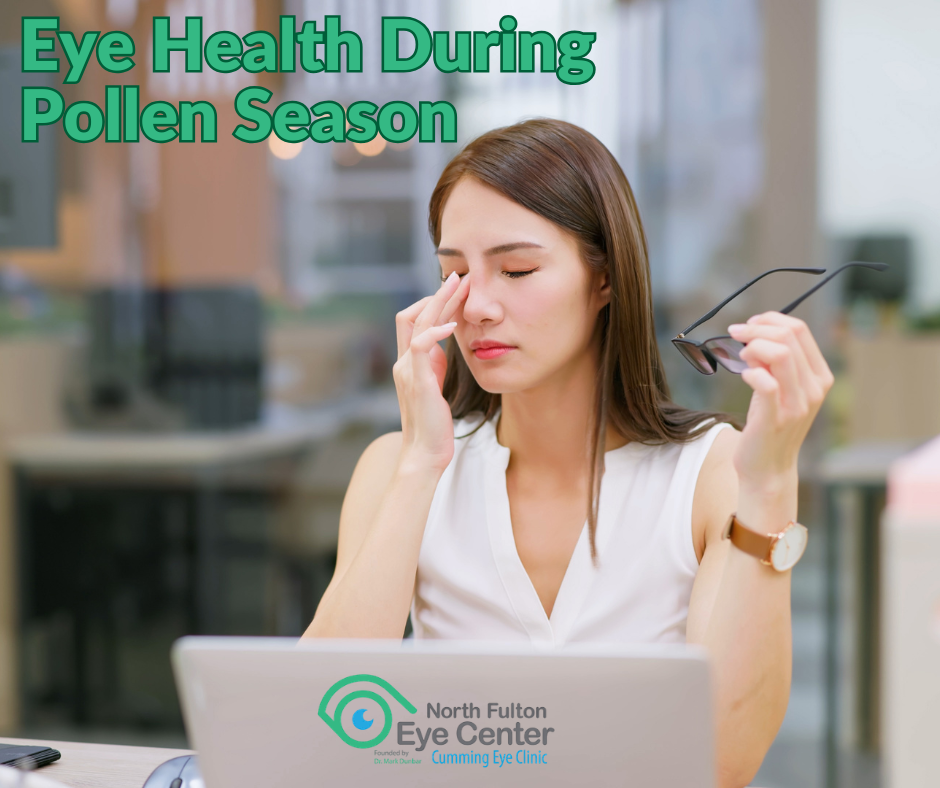
One of the most overlooked consequences of seasonal allergies is chronic eye rubbing. Persistent itching often leads patients to rub their eyes frequently, which can worsen inflammation and damage the ocular surface.
Over time, excessive eye rubbing has been associated with conditions such as keratoconus, a progressive thinning of the cornea that can affect vision quality. While not caused directly by pollen, the behavioral response to allergic symptoms plays a role in long-term eye health.
Preventive Strategies During High Pollen Months
Managing eye health during April in Atlanta requires a proactive approach. Because pollen exposure is unavoidable, the goal is to minimize contact and reduce inflammatory response.
Daily behaviors can significantly impact symptom severity. Showering after outdoor exposure, changing clothing, and keeping windows closed can reduce the amount of pollen brought indoors. Wearing sunglasses outdoors can help limit pollen contact with the eyes, and timing outdoor activities outside peak pollen hours—typically mid-morning through late afternoon—may also be beneficial.
Monitoring daily pollen counts is also important, as levels can fluctuate significantly from day to day.
When to Seek Evaluation
While many cases of seasonal eye allergies can be managed conservatively, persistent or severe symptoms should be evaluated. Chronic redness, significant discomfort, or vision changes may indicate more than simple allergic conjunctivitis. In a high-exposure environment like Atlanta, eye symptoms are often dismissed as routine allergies. However, ongoing inflammation can impact overall ocular health if not properly addressed.
April represents the peak of pollen season in Atlanta, with some of the highest airborne allergen levels in the country. Tree pollen dominates this period, with counts frequently reaching levels far above national averages. For the eyes, this means sustained exposure to allergens that can disrupt tear film stability, trigger inflammation, and significantly impact daily comfort and vision.
Eye health during pollen season is not just about managing symptoms—it is about protecting the ocular surface from ongoing inflammatory stress. Routine eye care and early management of symptoms can help reduce complications and improve quality of life during one of Atlanta’s most challenging seasons.
North Fulton Eye Center is here when you need us. (770) 475-0123