


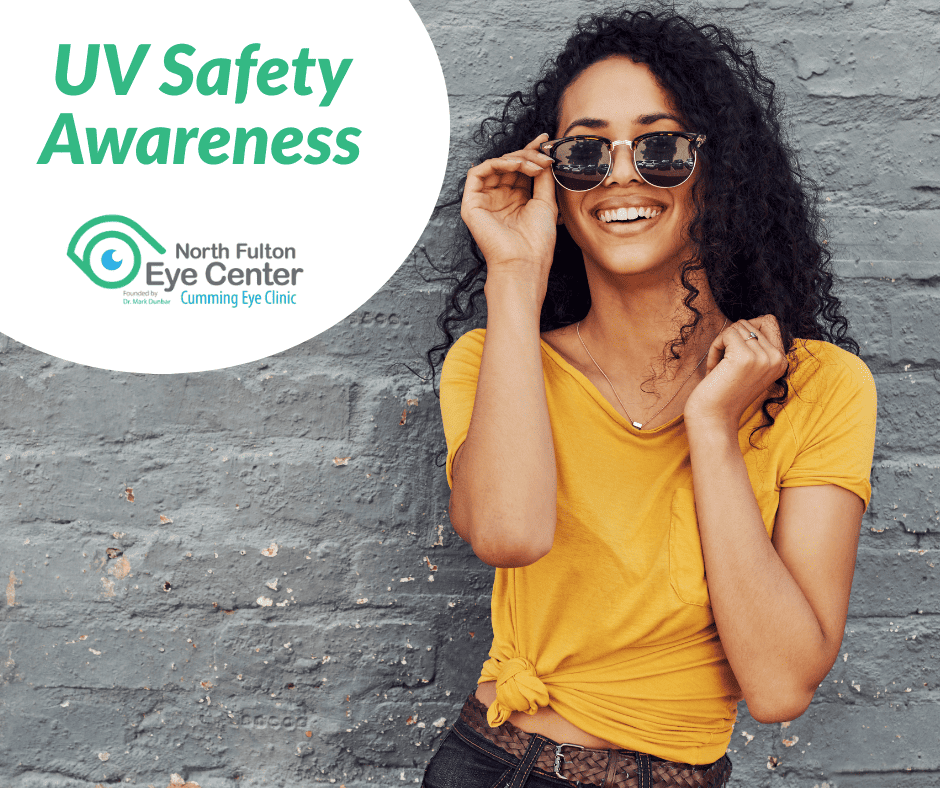
As temperatures rise across North Georgia and metro Atlanta, UV Safety Awareness becomes increasingly important for protecting both skin and eye health. Many people understand the risks ultraviolet (UV) radiation poses to the skin, but fewer realize that chronic UV exposure can also significantly damage the eyes over time. At North Fulton Eye Center, ophthalmologists encourage patients throughout Roswell, Cumming, and Alpharetta to prioritize year-round eye protection against harmful ultraviolet rays.
Ultraviolet radiation from the sun is present even on cloudy days and during cooler months. Long-term exposure can contribute to several serious eye conditions, including cataracts, macular degeneration, pterygium, photokeratitis, and certain cancers around the eyelids and ocular surface.
One of the most well-established links between UV exposure and eye disease involves cataracts. Cataracts occur when the eye’s natural lens becomes cloudy, leading to blurred vision, glare sensitivity, poor night vision, and faded color perception. Research shows cumulative UV exposure may accelerate cataract development over time, particularly in individuals who spend significant time outdoors without adequate eye protection.
UV radiation may also contribute to age-related macular degeneration (AMD), one of the leading causes of central vision loss among older adults. While genetics and smoking remain major risk factors, protecting the retina from prolonged UV damage may help reduce additional stress on sensitive retinal tissues.
Patients in Georgia are particularly vulnerable to sun-related eye damage due to the region’s strong sunlight, extended outdoor seasons, and high UV index during spring and summer months. Activities such as boating on Lake Lanier, golfing, hiking, gardening, poolside recreation, and youth sports all increase cumulative UV exposure.
One acute condition caused by excessive UV exposure is photokeratitis, essentially a “sunburn” of the eye. Symptoms may include pain, redness, tearing, blurry vision, light sensitivity, and the sensation of sand or grit in the eyes. Photokeratitis can occur after prolonged exposure to intense sunlight, especially around reflective surfaces such as water, sand, concrete, or snow.
Another common sun-related condition seen in ophthalmology is pterygium, sometimes called “surfer’s eye.” This growth develops on the white part of the eye and may gradually extend toward the cornea. Chronic UV exposure, wind, and dry conditions all increase risk. Pterygium can cause irritation, redness, and, in severe cases, affect vision.
Protecting the eyes from UV damage begins with choosing high-quality sunglasses. Ophthalmologists recommend sunglasses that block 99% to 100% of both UVA and UVB rays. Darker lenses alone do not necessarily provide better UV protection. Patients should specifically look for labels indicating full UV protection.
Wraparound sunglasses can provide additional defense by limiting sunlight entering from the sides of the eyes. Polarized lenses may also improve comfort by reducing glare during driving, boating, and outdoor recreation, though polarization itself does not replace UV protection.
Children’s eye protection is equally important. Because children often spend more time outdoors and their eyes allow more UV light to penetrate internal structures, early-life exposure can contribute to cumulative long-term damage. Parents are encouraged to ensure children wear properly fitting UV-protective sunglasses and wide-brimmed hats during outdoor activities.
Contact lens wearers should also understand that some contact lenses contain UV-blocking technology, but these lenses do not fully protect the entire eye or surrounding tissues. Sunglasses remain necessary even for patients with UV-filtering contacts.
Patients often assume UV exposure only matters during summer vacations or beach trips, but everyday exposure adds up over time. Driving, walking, outdoor exercise, sporting events, and even sitting near reflective pavement can increase UV exposure significantly.
UV safety also extends beyond sunlight. Artificial UV sources such as tanning beds can increase risk for cataracts and ocular surface damage. Ophthalmologists strongly discourage tanning bed use due to its known health risks.
For adults searching online for “ophthalmologist in Roswell GA,” “eye doctor in Cumming GA,” or “UV eye protection,” education and preventive care remain essential components of preserving long-term vision health. Comprehensive eye exams allow ophthalmologists to evaluate for early signs of UV-related eye damage and discuss individualized protective strategies.
In addition to sunglasses, patients can help protect their eyes by:
- Wearing wide-brimmed hats outdoors
- Avoiding peak UV hours when possible
- Using lubricating eye drops if dryness worsens outdoors
- Staying hydrated
- Avoiding direct sun exposure after eye procedures or surgery unless cleared by their ophthalmologist
As UV Safety Awareness campaigns increase each spring and summer, ophthalmologists throughout North Fulton and Forsyth County continue emphasizing that protecting the eyes from ultraviolet damage is not simply cosmetic—it is an important long-term investment in lifelong visual health.
At North Fulton Eye Center, patients receive comprehensive eye care focused on prevention, early detection, and maintaining healthy vision throughout every stage of life.
To schedule your comprehensive eye exam, call us at (770) 475-0123.