


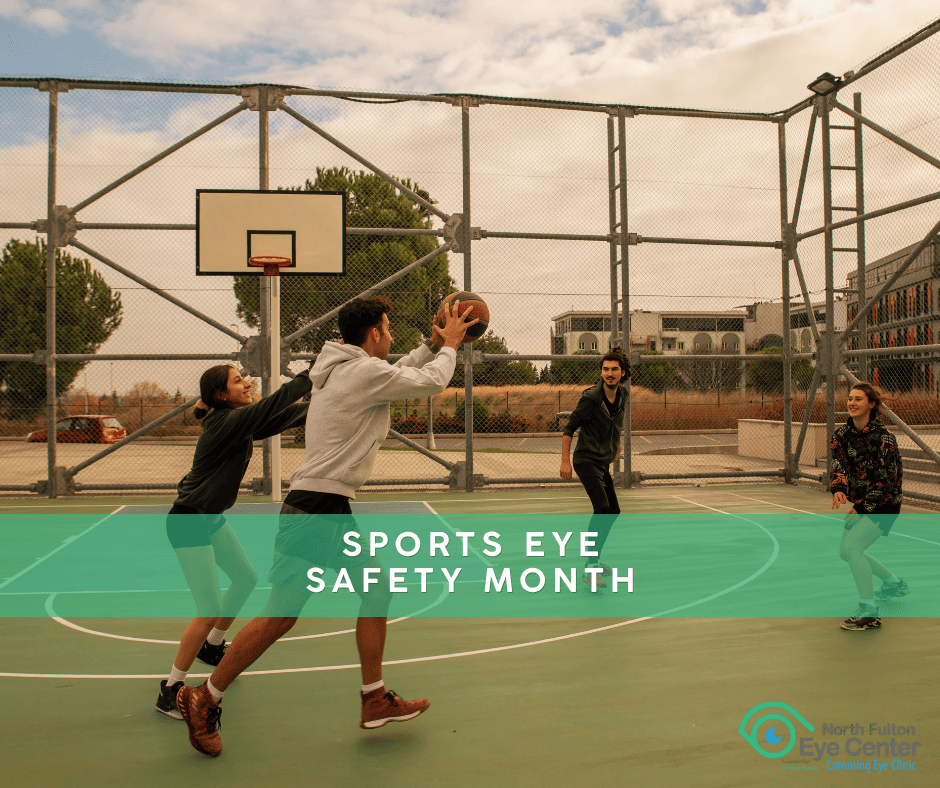
September is Sports Eye Safety Month, an opportunity to focus on an area of injury prevention that is often overlooked. Helmets, pads and mouthguards are widely accepted parts of athletic safety, but appropriate eye protection may be just as important.
The American Academy of Ophthalmology estimates that sports-related eye injuries send approximately 30,000 people to emergency departments in the United States each year. These injuries can affect children, teenagers and adults participating in organized sports, recreational leagues or casual activities.
Many sports eye injuries are preventable. The important distinction is that ordinary eyeglasses, sunglasses and contact lenses do not provide the same protection as properly fitted sports eye protection.
Which sports present the greatest risk to the eyes?
An eye injury can occur in almost any activity, but the risk is higher when a sport involves fast-moving balls, racquets, sticks, close physical contact or projectiles.
Basketball is a frequent cause of sports-related eye injuries because players compete in close proximity, creating opportunities for fingers or elbows to strike the eye. Racquet sports, baseball, softball, lacrosse, hockey and combat sports also carry meaningful risks.
Pickleball deserves attention as its popularity grows among adults. The ball can travel quickly at close range, and its size is small enough to strike directly within the eye socket. A paddle can also cause significant blunt trauma.
Common sports eye injuries include:
- Corneal abrasions
- Bleeding inside the eye
- Fractures around the eye socket
- Eyelid cuts
- Retinal tears or detachments
- Traumatic cataracts
- Damage to the optic nerve
- Rupture of the eyeball
Some injuries heal without lasting damage when they are treated promptly. Others can cause permanent vision loss.
Regular glasses are not sports eye protection
Standard prescription eyeglasses are designed to improve vision, not withstand athletic impact. Frames may break, and ordinary lenses may shatter or be driven toward the eye during a collision.
Contact lenses correct vision but provide no protection against impact. Athletes who wear contacts should still use protective sports goggles appropriate for their activity.
Sports eye protection should have impact-resistant polycarbonate lenses and be designed for the specific sport. Polycarbonate is lighter and considerably more impact-resistant than standard glass or conventional plastic lens materials.
Parents and athletes should look for protective eyewear that meets the appropriate American Society for Testing and Materials standard. ASTM F803 is the standard commonly used for protective eyewear in several sports, including basketball, baseball, softball, soccer and racquet sports. Different activities may require sport-specific face masks, shields or helmets in addition to protective lenses.
An ophthalmologist or qualified optical professional can help determine whether eyewear provides the right coverage, fit and level of impact protection.
Prescription sports goggles can provide protection and clear vision
Athletes who need vision correction do not necessarily have to choose between clear sight and eye protection. Prescription sports goggles can combine an individual’s corrective prescription with impact-resistant lenses.
A secure fit matters. Eyewear that is too loose may shift during movement, while equipment that is too tight can become uncomfortable and discourage consistent use. Children also need periodic fit checks because their facial structure and prescription can change as they grow.
Protective eyewear should be inspected for deep scratches, cracks, loose components or damage following a significant impact. Equipment that has been compromised may no longer provide its intended level of protection.
Extra precautions are important for athletes with vision in only one eye
Anyone who has substantially reduced vision in one eye should be especially careful to protect the better-seeing eye. An injury to the stronger eye could have a much greater effect on independence, education, employment and quality of life.
Protective eyewear may be recommended even for activities that other participants perform without it. An ophthalmologist can help patients and families understand which sports are appropriate and what type of protection should be used.
Having vision in only one eye does not automatically prevent a person from being physically active. The appropriate precautions depend on the person’s vision, eye health, chosen activity and the likelihood of impact.
What should you do after an eye injury?
The appearance of an eye injury does not always reflect its severity. Significant damage can occur without dramatic external swelling or bleeding.
Seek urgent eye care for:
- Sudden blurred, reduced or double vision
- Severe eye pain
- Light flashes, new floaters or a shadow in the visual field
- Blood visible inside the eye
- An irregularly shaped pupil
- Difficulty moving the eye
- An object embedded in the eye
- A deep cut involving the eye or eyelid
- Chemical exposure
- Significant impact followed by persistent symptoms
Do not press or rub an injured eye. Do not attempt to remove an embedded object, and do not apply pressure to control bleeding from the eyeball itself. A rigid shield may be placed loosely over the area while the person receives emergency care.
For chemical exposure, immediately flush the eye with clean, lukewarm water and continue rinsing while seeking medical guidance. Contact lenses should be removed if they do not come out during flushing, but rinsing should not be delayed while attempting to remove them.
Athletes should not return to play after a significant eye injury until they have been appropriately evaluated and cleared.
An eye examination can support safer athletic participation
A comprehensive eye examination can identify refractive errors, problems with visual acuity, eye alignment concerns and existing eye conditions that may affect performance or require additional protection.
Clear vision is only one part of sports vision. Depth perception, peripheral vision, eye coordination and the ability to track moving objects also contribute to athletic performance and safety.
Patients who have undergone eye surgery, have a history of retinal problems or live with an eye condition should ask their ophthalmologist whether a particular sport presents additional risk.
Protecting North Fulton athletes before an injury occurs
Sports Eye Safety Month is a reminder that vision protection should be considered before the season begins—not after an injury happens. Appropriate sports goggles, an accurate prescription, a secure fit and prompt attention to injuries can help athletes remain active while reducing avoidable risks.
For families and athletes seeking an ophthalmologist in Roswell or comprehensive eye care near Cumming, North Fulton Eye Center provides medical eye examinations, vision correction and guidance on appropriate protective eyewear.
North Fulton Eye Center is a trusted leader in North Fulton eye care for a reason: its team looks beyond whether a patient can read an eye chart and considers how vision, eye health and appropriate protection affect life outside the examination room. Whether a patient is preparing for a school season, joining an adult recreational league or returning to a favorite sport, thoughtful eye care can help protect the vision that makes participation possible.