
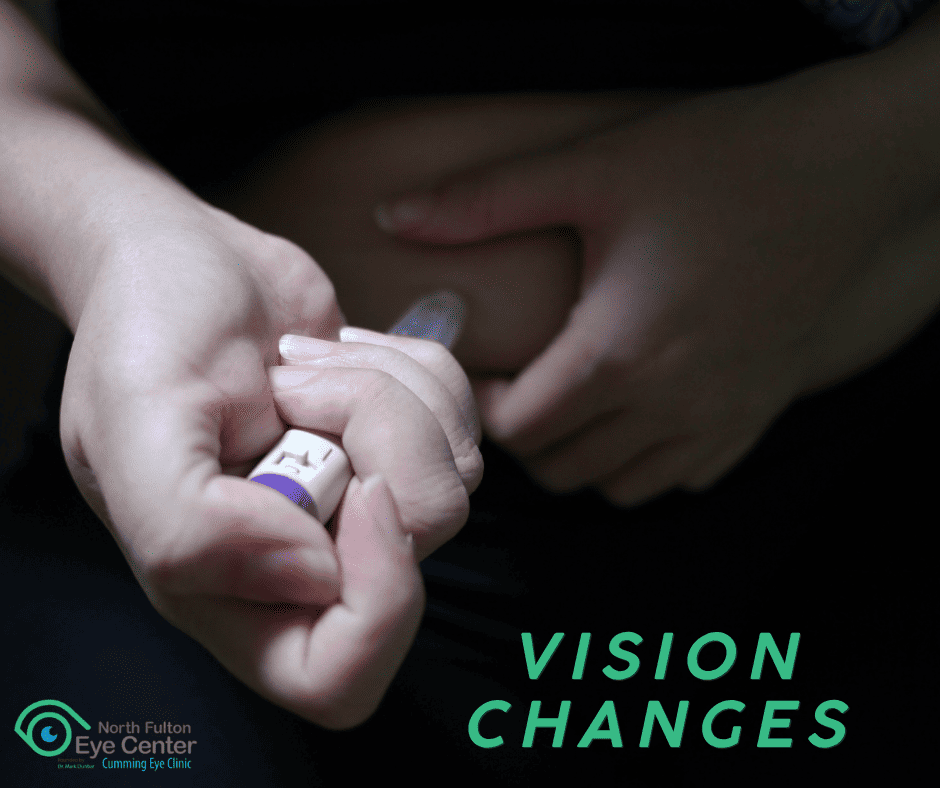
Reports linking GLP-1 medications to vision problems have raised understandable questions among patients using these treatments for diabetes or weight management. The evidence involves several distinct concerns: temporary blurred vision associated with blood sugar changes, worsening of existing diabetic retinopathy and a rare condition that damages the optic nerve.
Understanding these differences matters. Each condition affects the eye differently, and research findings about one medication or patient population do not automatically apply to every person taking a GLP-1 drug.
Which Medications Are Being Discussed?
Semaglutide, the active ingredient in Ozempic, Wegovy and Rybelsus, belongs to a class of medications called GLP-1 receptor agonists. These medications are used for specific diabetes and weight-management indications, depending on the product.
Tirzepatide, sold as Mounjaro and Zepbound, is often included in the same conversation, although it acts on both GIP and GLP-1 receptors. Its prescribing information and research findings should be considered separately from those for semaglutide.
For patients concerned about GLP-1 eye side effects, identifying the exact medication – and whether they have diabetes or an existing eye condition – is an important starting point.
Temporary Blurred Vision and Blood Sugar Changes
Blood glucose levels can affect the eye’s ability to focus. According to the National Institute of Diabetes and Digestive and Kidney Diseases, some people experience blurry vision for days or weeks when their diabetes medications or care plan change. Elevated glucose can alter fluid levels in the eye’s focusing tissues, and this type of blur may resolve as glucose levels return closer to normal.
This provides one possible explanation for blurred vision during diabetes treatment. However, patients should not assume that a new vision change is temporary or medication-related. An eye examination can help distinguish a focusing change from retinal disease, optic nerve damage or another condition requiring treatment.
Semaglutide and Diabetic Retinopathy
Diabetic retinopathy is damage to blood vessels in the retina, the light-sensitive tissue at the back of the eye. It can develop without noticeable symptoms and may eventually cause vision loss.
Ozempic’s U.S. prescribing information includes a warning about diabetic retinopathy complications. In a two-year clinical trial involving people with type 2 diabetes and high cardiovascular risk, these complications occurred in 3.0% of patients receiving Ozempic, compared with 1.8% receiving placebo. The difference was larger among patients who already had diabetic retinopathy when the trial began. These figures describe complications in that specific trial population; they are not a general estimate of blindness risk for everyone taking semaglutide.
Rapid improvement in blood sugar control can temporarily worsen diabetic retinopathy. Ozempic’s prescribing information therefore recommends monitoring patients with a history of the condition. Mounjaro’s prescribing information also warns about temporary worsening associated with rapid glucose improvement and recommends monitoring patients with existing retinopathy.
This concern does not mean that managing diabetes is harmful to eye health. Persistent high blood glucose can damage retinal blood vessels. It means that patients with diabetic eye disease may need closer ophthalmic monitoring as their diabetes treatment changes.
Semaglutide and NAION: A Rare Optic Nerve Concern
Non-arteritic anterior ischemic optic neuropathy, or NAION, occurs when insufficient blood flow damages part of the optic nerve. It typically causes sudden, painless vision loss in one eye and can result in permanent impairment. It is a different condition from diabetic retinopathy.
In June 2025, the European Medicines Agency’s safety committee concluded that NAION is a very rare side effect of semaglutide medicines, including Ozempic, Wegovy and Rybelsus, following a review of clinical trials, observational studies and other safety data.
The agency reported that several large epidemiological studies suggested approximately twice the risk of NAION among adults with type 2 diabetes exposed to semaglutide compared with those not taking it. It estimated approximately one additional case per 10,000 person-years of treatment – equivalent to following 10,000 people for one year. A doubled relative risk can therefore represent a small absolute increase when the condition is rare.
Research results have varied. A large 2025 study published in JAMA Ophthalmology identified a small increase in NAION incidence associated with semaglutide exposure, while another multinational study did not find a statistically significant association. Observational studies can identify associations but cannot, by themselves, establish that a medication caused an individual patient’s vision loss.
Do These Findings Apply to Every GLP-1 Medication?
The European regulatory conclusion specifically concerns semaglutide. It should not be presented as proof that all GLP-1 medications carry an identical NAION risk.
A separate 2025 observational study examined semaglutide or tirzepatide use in people with type 2 diabetes and reported an association with NAION. Because the study evaluated the medications together, its findings do not establish an identical, independently measured risk for each drug.
Differences in medications, underlying health conditions and study methods are important when interpreting headlines about “weight-loss drugs and blindness.”
When Should Patients Seek Eye Care?
Sudden vision loss or rapidly worsening eyesight requires immediate medical evaluation, even if there is no pain. New flashes, a sudden increase in floaters or a curtain-like shadow across vision also require urgent attention because they may indicate a retinal emergency. Do not wait for a routine appointment or assume these symptoms will resolve as your body adjusts to treatment.
For ongoing concerns, tell your ophthalmologist which medication you take, when treatment began, whether your dose changed and whether you have diabetes or a history of diabetic retinopathy. Medication decisions should be coordinated with the prescribing clinician and eye doctor.
Eye Care for Patients in Roswell, Alpharetta and Cumming
Regular diabetic eye examinations remain important because retinal damage may begin before vision changes become noticeable. The National Eye Institute recommends a comprehensive dilated eye exam at least annually for people with diabetes, with more frequent examinations when needed.
North Fulton Eye Center and Cumming Eye Clinic provide comprehensive ophthalmology care for patients in Roswell, Cumming and surrounding communities, including Alpharetta. Patients with new blurred vision, existing diabetic eye disease or questions about medication-related vision changes can schedule an evaluation to assess their eye health and discuss appropriate follow-up.
To schedule an appointment, call 770-475-0123 or visit North Fulton Eye Center at one of our two convenient locations – Roswell, GA and Cumming, GA. Sudden vision loss requires immediate care.