

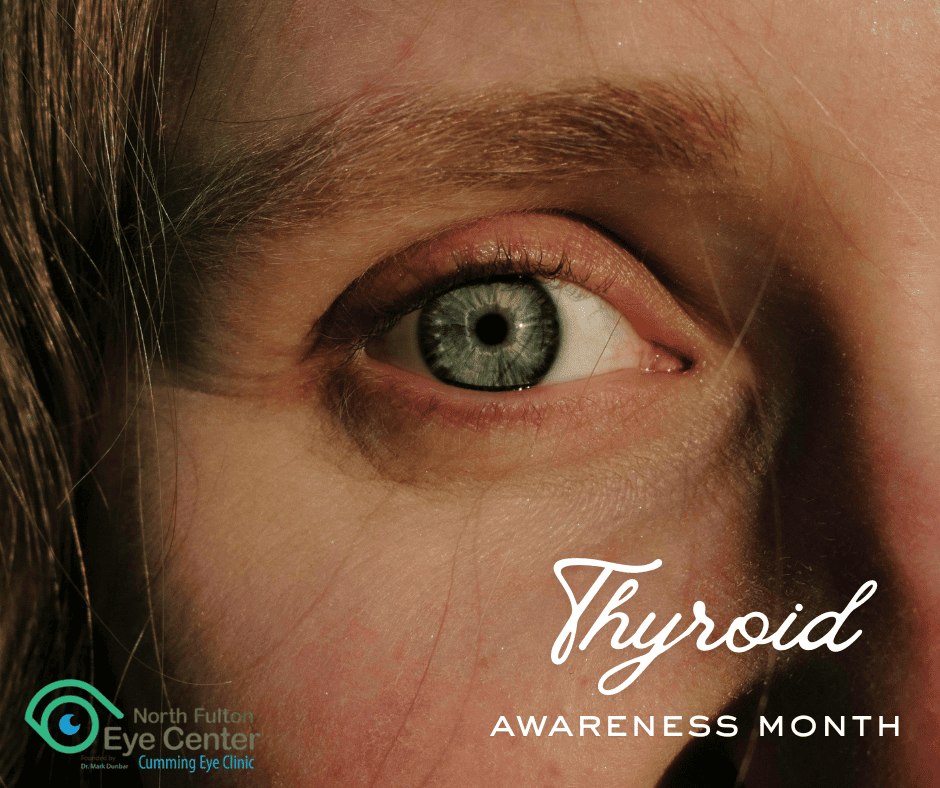
January is Thyroid Awareness Month, which focuses on conditions affecting the thyroid gland and their effects throughout the body. Thyroid disease can have a direct impact on eye health through a condition known as thyroid eye disease, also called Graves’ ophthalmopathy or thyroid-associated ophthalmopathy.
Thyroid eye disease is an autoimmune condition in which the immune system mistakenly attacks the tissues surrounding the eyes. This immune response causes inflammation of the eye muscles, fat, and connective tissue within the eye socket, leading to changes in eye appearance, comfort, and function.
What is Thyroid Eye Disease
Thyroid eye disease is most commonly associated with hyperthyroidism related to Graves’ disease, but it can also occur in people with normal thyroid function or hypothyroidism. The condition results from immune system activity rather than thyroid hormone levels alone.
Inflammation causes swelling and thickening of tissues behind and around the eyes. Because the eye socket is a confined space, this swelling can push the eyes forward and restrict normal eye movement. The disease typically follows an active inflammatory phase that may last months to years, followed by a more stable phase.
According to the National Eye Institute, thyroid eye disease varies widely in severity, ranging from mild irritation to sight-threatening complications.
Eye Symptoms and How They Affect Daily Life
Symptoms of thyroid eye disease can affect both appearance and vision. Common symptoms include dryness, redness, irritation, excessive tearing, eyelid retraction, bulging of the eyes, light sensitivity, and double vision. These symptoms may occur in one or both eyes and can fluctuate over time.
In moderate to severe cases, inflammation may interfere with eye movement, causing double vision that affects reading, driving, and daily tasks. Swelling can also prevent the eyelids from closing fully, increasing the risk of corneal damage due to exposure.
In rare but serious cases, inflammation can compress the optic nerve, leading to decreased vision, color vision changes, or visual field loss. This represents a medical emergency that requires prompt ophthalmologic evaluation.
Thyroid Eye Disease Across Adult Ages
Thyroid eye disease most commonly affects adults between ages 30 and 60, but it can occur at any adult age. Younger adults may experience more active inflammatory symptoms, while older adults may have more pronounced structural changes affecting eye movement and vision.
Age does not predict severity. Some individuals experience mild symptoms that resolve over time, while others develop progressive disease regardless of age. Men are less frequently affected than women but tend to develop more severe disease when it occurs.
Because symptoms may be subtle early on, adults of all ages with thyroid disease benefit from awareness and prompt evaluation when eye changes develop.
Relationship Between Thyroid Levels and Eye Disease
An important feature of thyroid eye disease is that eye symptoms do not always correlate with thyroid hormone levels. Eye disease may appear before thyroid disease is diagnosed, at the same time, or after thyroid levels have been medically controlled.
Normal thyroid blood tests do not rule out active thyroid eye disease. This separation between thyroid function and eye involvement highlights the need for eye-specific evaluation rather than relying solely on laboratory values.
Smoking and Thyroid Eye Disease
Smoking is one of the strongest known risk factors for both the development and progression of thyroid eye disease. Studies consistently show that smokers are more likely to develop thyroid eye disease, experience more severe symptoms, and respond less effectively to treatment.
Smoking cessation has been shown to reduce disease severity, improve treatment response, and decrease the likelihood of disease progression. Avoiding secondhand smoke is also recommended, as exposure may worsen symptoms.
Importance of Ophthalmologic Evaluation
Ophthalmologic evaluation is essential for individuals with thyroid disease who develop eye symptoms. A comprehensive eye exam allows assessment of eye surface health, eyelid position, eye movement, visual acuity, color vision, and optic nerve function.
Imaging and specialized testing may be used to monitor disease progression and identify complications. Early evaluation helps guide treatment decisions and allows for timely intervention if vision-threatening changes occur.
Treatment depends on disease severity and stage. Management may include lubrication to protect the eye surface, anti-inflammatory therapies to reduce swelling, prisms or other interventions for double vision, and surgical treatment in selected cases once the disease has stabilized.
A Reminder During Thyroid Awareness Month
Thyroid Awareness Month highlights the importance of recognizing that autoimmune thyroid disease can have direct and significant effects on eye health. Eye symptoms should never be ignored, even when thyroid hormone levels appear well controlled.
Awareness, early evaluation, and coordinated care between medical providers and ophthalmologists play an important role in preserving vision and eye comfort for adults with thyroid disease at every stage of life.